
Credit to authors via amazon links
On Amazon
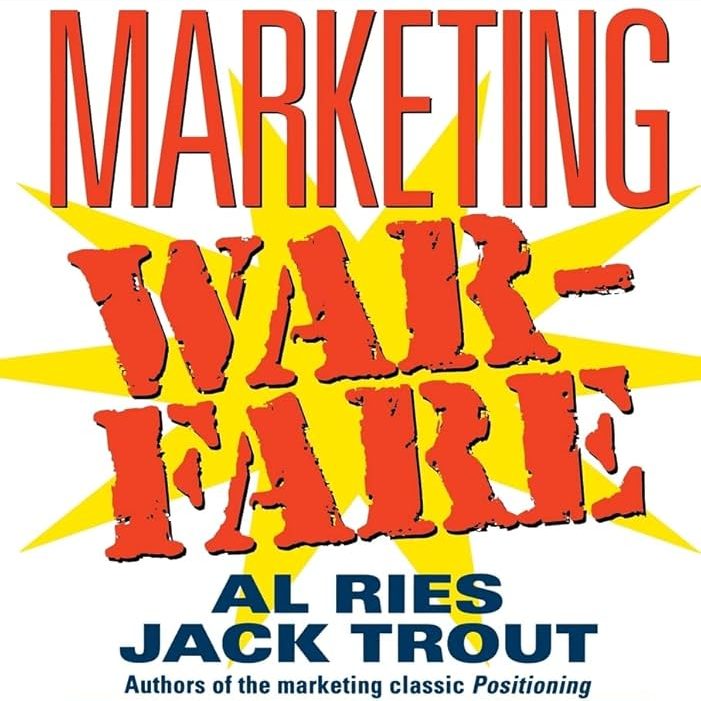
“Marketing Warfare” by Al Ries and Jack Trout redefines marketing strategy by drawing parallels between military warfare and business competition. The authors argue that to achieve success, companies must adopt strategic mindsets similar to military commanders, understanding that markets are battlegrounds where only the most strategically adept survive and thrive.
The book outlines four primary types of marketing warfare:
- Defensive Warfare: Tailored for market leaders aiming to protect their dominant position by reinforcing strengths, anticipating competitive moves, and constantly innovating to stay ahead.
- Offensive Warfare: Designed for challengers seeking to unseat the leaders by targeting their weaknesses, launching bold marketing campaigns, and offering superior products or services.
- Flanking Warfare: Suitable for companies identifying and exploiting underserved market segments or niches, thereby avoiding direct confrontation and creating new opportunities for growth.
- Guerrilla Warfare: Ideal for small businesses with limited resources, focusing on localized and specialized markets using unconventional and creative tactics to gain attention and market share.
Ries and Trout emphasize the importance of understanding competitors thoroughly, simplifying strategies for effective execution, and concentrating resources where they will have the most significant impact. The book provides practical insights and real-world examples, offering a strategic framework that helps businesses of all sizes navigate competitive landscapes and achieve sustained success through disciplined and informed marketing approaches.
For more on the how these perspectives can work in B2B Marketing, visit our blog.
On Amazon
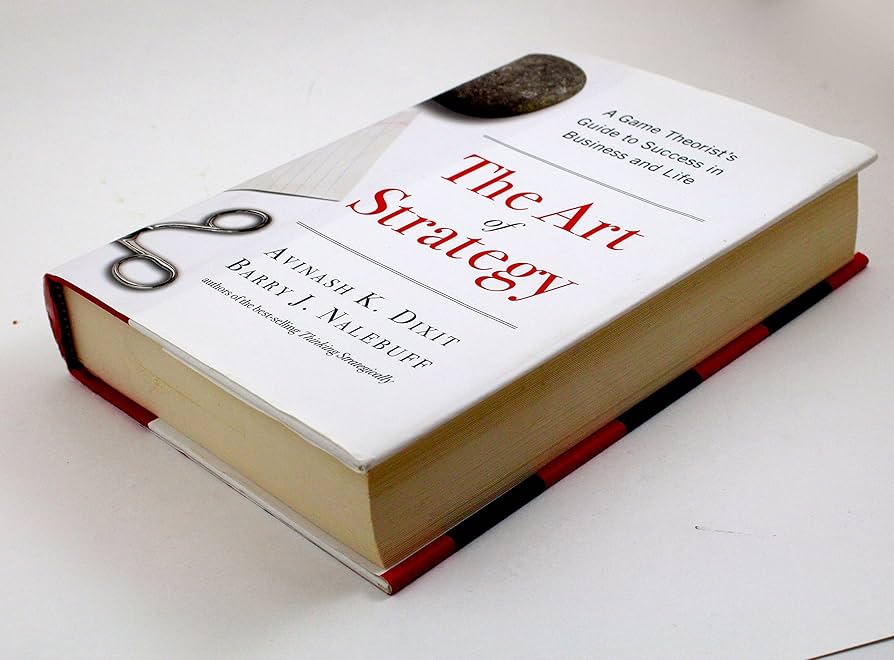
The Art of Strategy by Avinash K. Dixit and Barry J. Nalebuff offers a deep dive into the principles of game theory and their application to real-world decision-making. The book serves as a practical guide for understanding how strategic thinking can influence outcomes in various scenarios, ranging from business negotiations and political maneuvering to everyday life choices. The authors introduce readers to fundamental game theory concepts, including the Prisoner’s Dilemma, Nash Equilibrium, and backward induction, all made accessible through relatable examples and clear explanations.
One standout example in the book is the analysis of airline pricing strategies. Dixit and Nalebuff explain how airlines use game theory to set prices, anticipating the actions of competitors and the responses of consumers. By understanding the strategic interplay between different airlines, readers gain insights into why ticket prices fluctuate and how companies maneuver to maximize profits while staying competitive.
The authors also emphasize the importance of factors like commitment, credibility, and cooperation in shaping successful strategies. Whether you’re navigating a complex business negotiation, planning a marketing campaign, or making personal decisions, The Art of Strategy provides valuable insights that help you anticipate the actions of others and make more informed choices. The book is an essential read for anyone looking to sharpen their strategic thinking and improve decision-making in both professional and personal contexts.
Strategy is both underused in B2B, and also sometimes misrepresented, for some thoughts on how this book could help your B2B marketing thinking, check this out.

On Amazon
Freakonomics: A Rogue Economist Explores the Hidden Side of Everything by Steven D. Levitt and Stephen J. Dubner is a compelling book that challenges conventional thinking by applying economic theory to unconventional subjects. The authors explore how incentives drive behavior, revealing surprising truths about the world around us. Through a series of fascinating case studies, Levitt and Dubner demonstrate how data can uncover hidden connections between seemingly unrelated phenomena.
The book covers topics such as why schoolteachers might cheat on standardized tests, how the economics of drug dealing resemble corporate structures, and the subtle ways a person’s name can influence their life outcomes. Each chapter unveils the power of incentives and how they shape human behavior, often leading to unexpected results. The authors encourage readers to question conventional wisdom and consider the hidden forces at play in everyday life.
Freakonomics is a thought-provoking exploration of the hidden side of everything, offering readers a fresh perspective on how the world works. Its unique blend of economics, sociology, and psychology makes it a must-read for anyone interested in understanding the underlying mechanisms that drive human behavior.
For a deeper dive into the lessons from Freakonomics and how they can be applied to B2B marketing, check out our blog article.
On Amazon
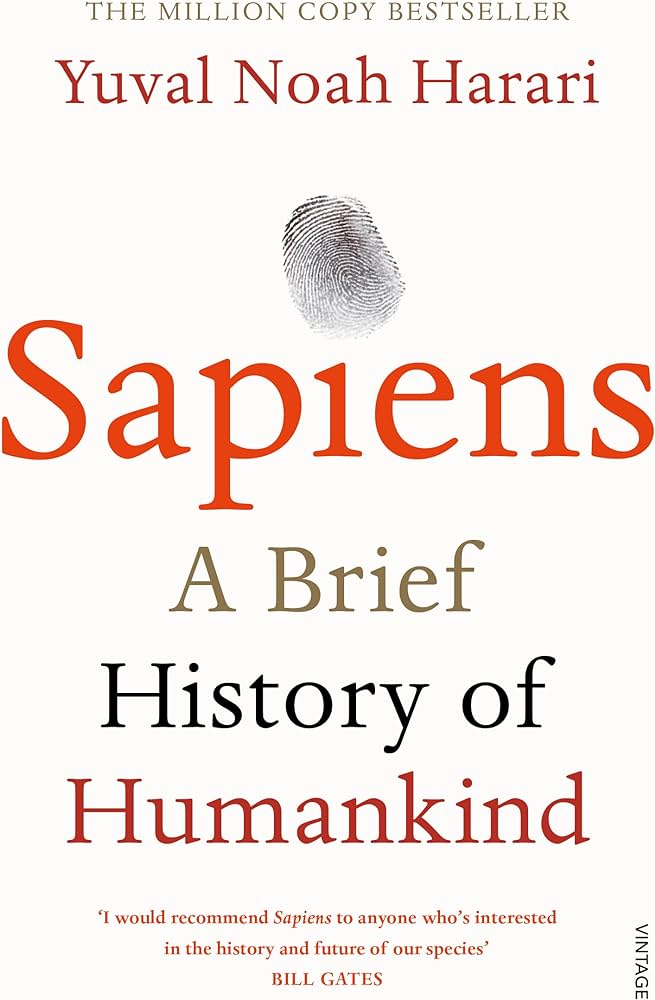
Yuval Noah Harari’s Sapiens: A Brief History of Humankind provides profound insights into the psychological drivers behind modern consumer behavior. The book’s concept of “imagined realities”—the shared beliefs in constructs like money, brands, and nations—illustrates how these non-physical entities influence human actions. In consumer psychology, this translates to the way brands create perceived value that extends beyond their products, influencing purchasing decisions based on identity and narrative rather than just functionality.
Harari’s discussion of the Agricultural Revolution is also relevant, as it marked a shift from nomadic lifestyles to settled societies that accumulated resources and developed social hierarchies. This historical shift laid the foundation for consumer culture, where the acquisition of material goods became a key indicator of social status. Today, marketers tap into this deep-rooted desire for status by promoting products as symbols of wealth and success.
The Cognitive Revolution, which allowed humans to create and share myths, can be compared to modern marketing practices. Marketers use storytelling to craft compelling narratives that shape consumer perceptions and drive engagement. By understanding the psychological need for narratives rooted in our evolutionary past, brands can connect more deeply with their audience.
Harari also touches on the future, suggesting that biotechnology and artificial intelligence could radically alter human values and behavior. As these technologies evolve, they will likely impact consumer psychology, requiring marketers to anticipate and adapt to these changes.
In essence, Sapiens offers a rich framework for understanding the historical and psychological forces that continue to shape consumer behavior, from ancient times to the potential future of humanity.
On Amazon
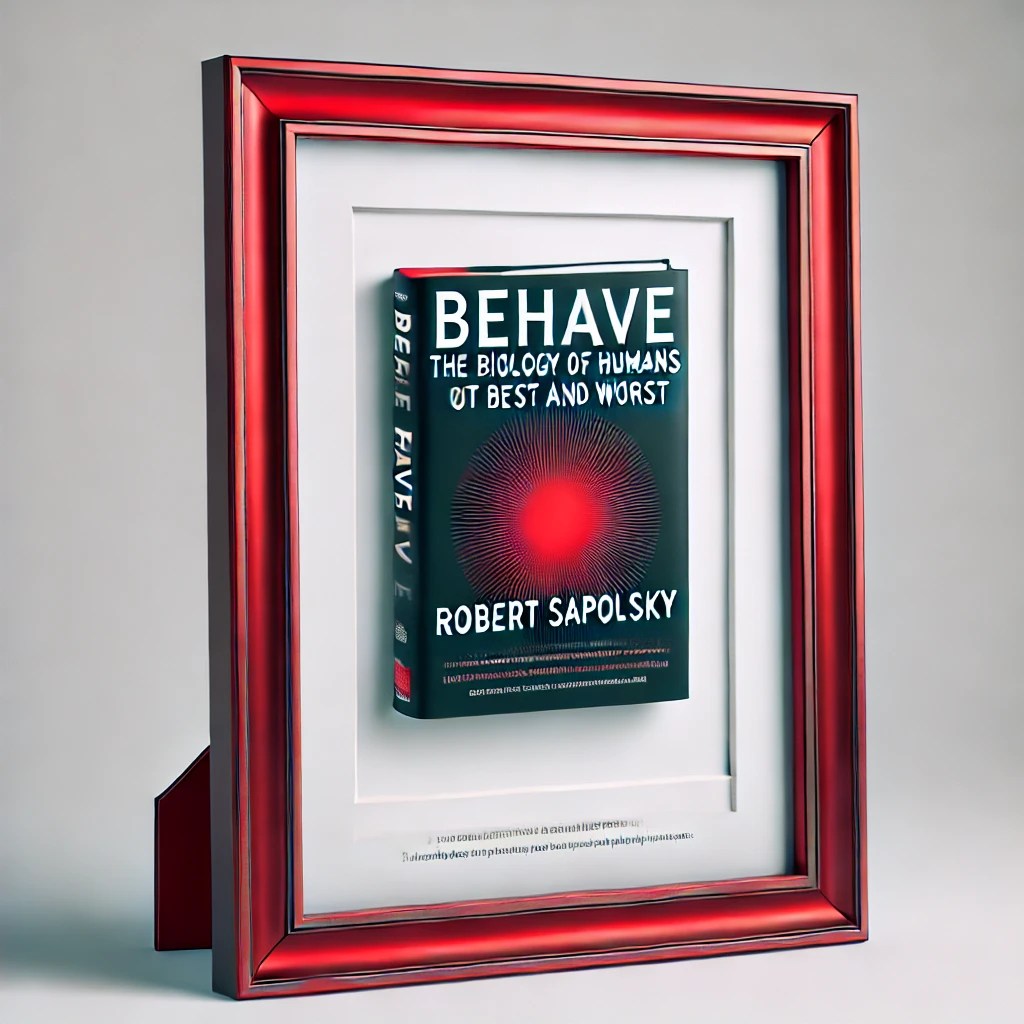
Robert Sapolsky’s Behave: The Biology of Humans at Our Best and Worst offers a profound exploration into the intricacies of human behavior, revealing how various factors shape our decisions. By examining the neuroscience behind our actions, Sapolsky provides insights that are directly applicable to understanding consumer behavior in the marketplace.
At the core of decision-making is the brain, the organ responsible for processing information and guiding actions. Sapolsky’s work highlights how our brains react instantaneously to stimuli, which can significantly influence consumer choices. For instance, when consumers encounter a product, their brain’s immediate emotional response—shaped by prior experiences and sensory inputs—can determine whether they make a purchase. The amygdala, a part of the brain associated with emotional responses, plays a key role in this process. Marketers can leverage this by creating emotionally charged advertisements that trigger positive responses, leading to impulse purchases.
Beyond the biological level, Sapolsky delves into how cultural and social factors influence behavior. Consumers do not operate in a vacuum; their decisions are heavily shaped by societal norms and the behavior of those around them. This is evident in the concept of social proof, where people are influenced by the actions and opinions of others. Sapolsky’s analysis suggests that understanding these cultural influences is crucial for marketers aiming to align their strategies with the deep-seated values of their target audience.
Sapolsky also provides an evolutionary perspective on behavior, explaining how our ancestral drives continue to shape modern consumer habits. The desire for status, for instance, can drive people to purchase luxury goods, echoing ancient instincts to display wealth and gain social standing. By positioning products as symbols of success, marketers can tap into these evolutionary drives to influence purchasing decisions.
Ultimately, Sapolsky’s multidisciplinary approach, integrating biology, psychology, and sociology, offers a comprehensive understanding of what drives human behavior. Marketers can apply these insights to develop strategies that resonate more deeply with consumers, appealing not just to their rational minds but also to the instinctual and emotional factors that guide their decisions.
Behave offers invaluable insights into the complex interplay of factors that influence behavior, making it a must-read for anyone interested in consumer psychology and marketing. By applying the principles outlined in the book, businesses can create more effective, targeted campaigns that connect with their audience on a deeper level.

Daniel Kahneman’s Thinking, Fast and Slow offers invaluable insights into how consumers think and make decisions, which can be leveraged to enhance marketing strategies. The book introduces the concept of two systems of thinking: System 1, which is fast, intuitive, and automatic, and System 2, which is slow, deliberate, and analytical. In the context of consumer behavior, these systems explain why individuals might make quick, impulse purchases or, conversely, carefully consider their options before committing to a decision.
Kahneman explains that heuristics—mental shortcuts that simplify decision-making—often lead to cognitive biases. For example, the availability heuristic shows how consumers might judge the popularity or quality of a product based on how easily they can recall it. This bias can cause consumers to overestimate the importance of products they frequently see or hear about, driving their purchasing decisions. Marketers can capitalize on this by ensuring their products are highly visible across different platforms.
The book also discusses the concept of anchoring, where the first piece of information a consumer encounters heavily influences their subsequent decisions. For instance, if a consumer sees a product listed with a high original price followed by a discount, they may perceive the deal as more favorable than it actually is. This demonstrates the power of strategic pricing in influencing consumer choices.
Framing is another key concept in the book, where the way information is presented significantly affects decision-making. Kahneman illustrates how consumers’ perceptions can be shaped by the framing of choices, such as highlighting the positive aspects of a product (e.g., “90% fat-free” rather than “10% fat”). This can guide consumers towards particular decisions based on how the options are presented.
Furthermore, Thinking, Fast and Slow explores Prospect Theory, which explains that people are generally more averse to losses than they are motivated by equivalent gains. This theory suggests that emphasizing potential losses, such as missing out on a deal or falling behind competitors, can be more effective in driving consumer behavior than highlighting potential benefits.
Kahneman’s insights challenge traditional views of consumer rationality and offer practical applications for marketers. By understanding and leveraging these psychological principles, marketers can craft strategies that resonate more deeply with consumers, ultimately influencing their decision-making processes and driving better business outcomes.
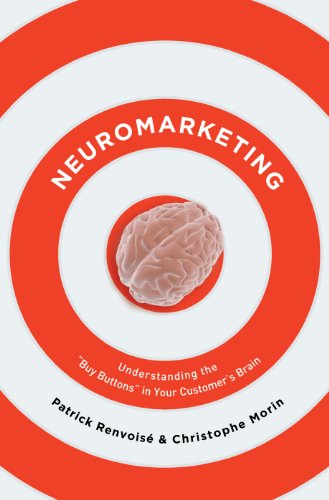
On Amazon
Neuromarketing: Understanding the Buy Buttons in Your Customer’s Brain by Patrick Renvoise and Christophe Morin explores how neuroscience can be leveraged to influence consumer decision-making. The authors argue that the human brain can be divided into three parts: the “new brain,” which processes rational data; the “middle brain,” which processes emotions; and the “old brain” or “reptilian brain,” which is responsible for decision-making.
The key premise of the book is that effective marketing should target the old brain, as it plays a crucial role in making purchasing decisions. Renvoise and Morin outline six stimuli that appeal to the old brain: focusing on self-interest, creating contrast, offering tangible benefits, establishing a strong beginning and end to a message, providing visual stimuli, and tapping into emotions.
The book introduces a four-step methodology for crafting messages that resonate with the old brain: diagnosing the customer’s pain points, differentiating your offerings from competitors, demonstrating value, and delivering the message effectively. Throughout, the authors provide practical examples and techniques, such as using “grabbers” like stories or rhetorical questions to capture attention.
While the book is practical and accessible, some reviewers note that it lacks scientific rigor and fails to provide thorough references for the research it cites. Despite this, it is considered a valuable resource for sales and marketing professionals looking to apply neuromarketing principles to enhance their effectiveness.
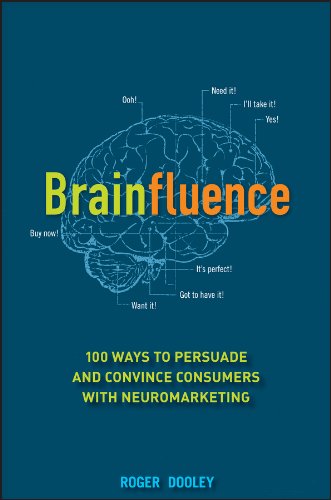
On Amazon
Brainfluence explores how insights from neuroscience can enhance marketing strategies by tapping into the subconscious drivers of consumer behavior. Roger Dooley presents 100 practical techniques rooted in neuromarketing research to help businesses influence purchasing decisions more effectively.
The book delves into various aspects of how consumers think and feel, revealing how subtle cues and psychological triggers can significantly impact behavior. For example, Dooley explains how the brain’s reward system can be activated through specific marketing techniques, such as using attractive visuals or offering rewards, which can lead to increased customer engagement and loyalty.
Dooley also discusses the role of emotions in decision-making. He emphasizes that emotional responses often outweigh rational analysis in consumer choices, suggesting that marketers should craft messages and experiences that resonate emotionally with their audience. Techniques such as storytelling and creating a sense of urgency are highlighted as effective methods for capturing attention and driving action.
Another key topic is the concept of social proof—how people are influenced by the behaviors and opinions of others. Dooley provides strategies for leveraging reviews, testimonials, and social media to build trust and encourage conversions.
Overall, Brainfluence combines scientific insights with actionable advice, offering a comprehensive guide for marketers seeking to apply neuromarketing principles in their campaigns. The book is well-regarded for its practical tips and clear explanations, making it a valuable resource for both seasoned professionals and those new to the field.

On Amazon
The One-Page Content Marketing Blueprint by Prafull Sharma offers a streamlined approach to creating an effective content marketing strategy. The book provides a step-by-step guide to help businesses craft a clear, actionable plan on a single page. The aim is to simplify the process of content marketing and make it more accessible for companies of all sizes.
Sharma begins by emphasizing the importance of understanding the target audience and setting specific, measurable goals. The blueprint includes sections for defining the target market, setting objectives, and determining key performance indicators (KPIs). This approach helps ensure that content efforts are aligned with business goals and can be effectively measured.
The book also covers content creation and distribution strategies. Sharma provides practical advice on developing a content calendar, choosing the right content formats, and selecting appropriate distribution channels. He stresses the need for consistency and relevance in content to engage the target audience and drive desired outcomes.
One of the key features of Sharma’s blueprint is its focus on agility. The one-page format encourages marketers to be flexible and adapt their strategies based on performance data and changing market conditions. The book includes tips for analyzing content performance and making data-driven adjustments to optimize results.
Overall, The One-Page Content Marketing Blueprint is praised for its clarity and practicality. It offers a straightforward method for building a content marketing strategy that is easy to implement and monitor. The book is particularly useful for businesses looking to enhance their content marketing efforts without getting bogged down by overly complex plans.
 Warrier Wala's Test + Learn